I have been to Uplands park a lot of times
and I really enjoy the Gary Oak meadow ecosystem, but the invasive
species at Uplands are hard. I've heard of other parks that
have oak meadows so I decided to take a walk at some parks and see
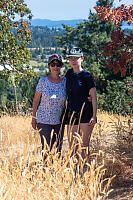
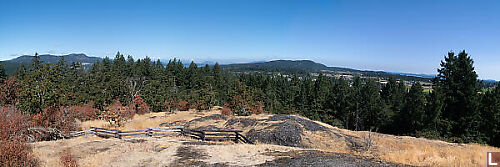
what is available. Oakhaven is in quite a rural part of
Saanich where the lots are huge and the parking is free.
There appears to be a water storage facility here which has a
strong support road.
My favorite season is the spring where the
flowers fill in between the trees. August is dry month and
there are now showy fields of flowers but if you look a little
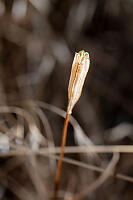
closer you can see the dried seed pods ready to distribute seeds.
There are lots of formal trails and
viewpoints in this park. The trails at Uplands are generally
flatter.
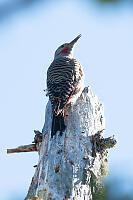
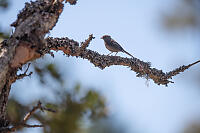
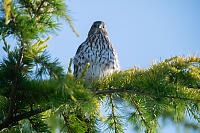
We were lucky to see some birds in the
park. As far as I can tell, there is no standing water in
the park or even an obvious stream which often attracts birds.
This park's signature view is being able to see both sides of the
Saanich peninsula.
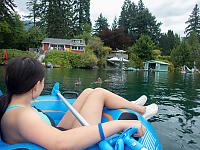
Rafting Cowichan River
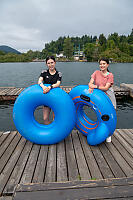
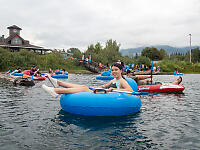
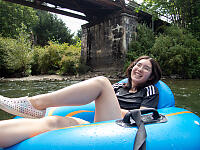
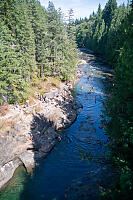
Rafting on the Cowichan River has been
famous for years and not always for good reason. There is a
rental company that rents out the inner tubes and paddles and will
pick you up after a two or three float down the river. The
river is controlled by a dam so the water levels are pretty
consistent through the summer. The concern is that all of
these rafters have sunscreen on and it is wiping out the bottom of
the ecosystem.
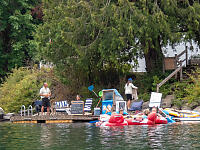
There river is lined on both sides with docks and summer
houses. Some of these houses offer services for rafters,
either buying things or taking your empty containers. There
weren't a lot of boats on the river, but we did see a few kayaks
paddle by.
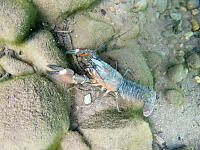
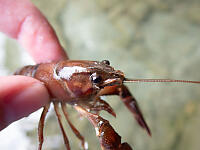
We were quite surprised to see min-lobsters on the bottom of the
river. These are actually invasive crayfish and they are
quite plentiful.
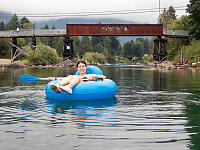
For the most part, the river is a slow,
lazy float. In the second half of the trip has some sections
of rapids, but nothing to worry about. The houses thin out
and then we are in the forest.
Family Reunion on Comox
My Aunt kindly hosts a summer party every year. We have
some family that live on the island but a larger group come over
the from the mainland. Some of us camp, some can stay in the
house and some stay in close by hotels, but for each day we are
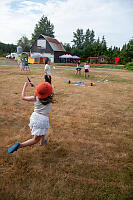
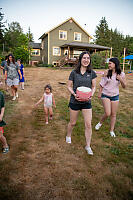
all together. There are lots of kids and lots of open space
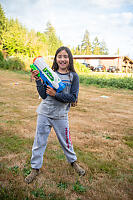
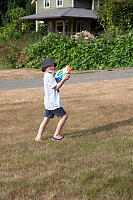
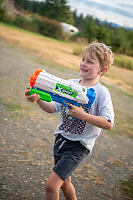
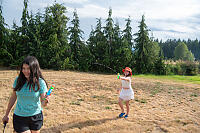
so a game with water guns doesn't involve too many
bystanders.
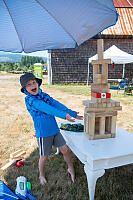
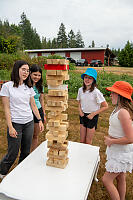
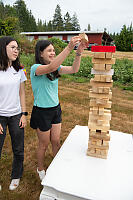
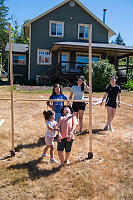
My Aunt also rents some games and toys for the kids to
play. A yard sized version of jenga doubles as set of
blocks.
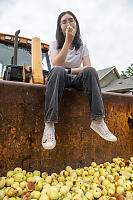
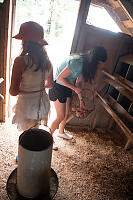
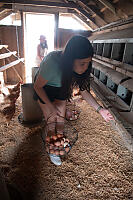
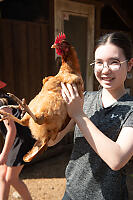
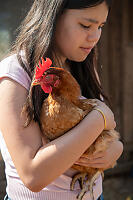
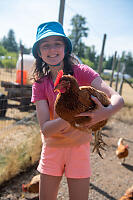
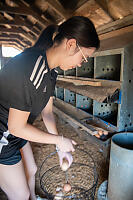
The farm we stay at is a working farm (farm stand eggs, but
mostly hay fields) and the eggs do need collecting every
morning. We do keep the number of kids down to 2 at a time
to manage the stress on the birds. In several years the kids
have yet to break an egg.
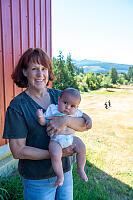
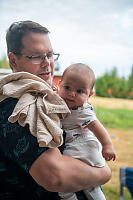
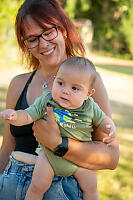
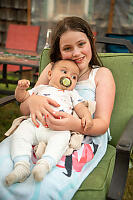
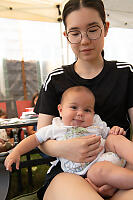
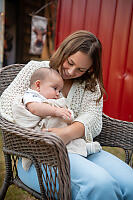
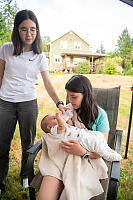
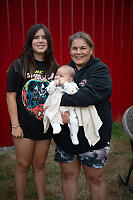
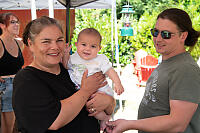
This is the first summery party for Walter - Jessica and Shelton's
forth child. He isn't yet walking and was really patient
with being held by not his parents so he was passed around a lot
by people that like to carry babies.
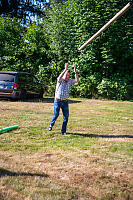
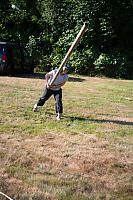
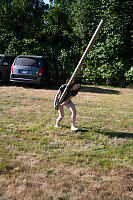
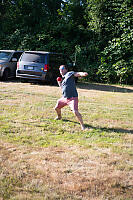
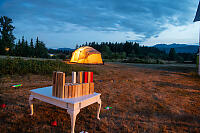
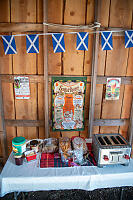
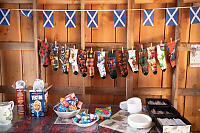
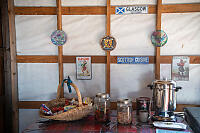
We often do have a theme for the summer parties and this year the
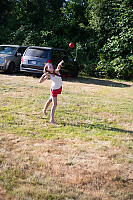
theme was Scotland. As part of that theme, we held a small
games with Scottish classics like Caber Toss and shot put.
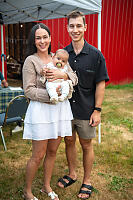
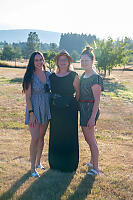
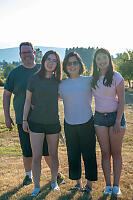
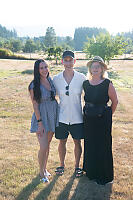
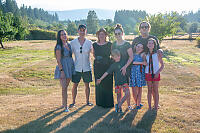
As we don't see everyone all the time, the summer party is a great
time to take family photos.
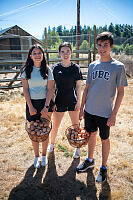
Most people had gone home, but there was still one last round of
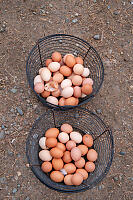
egg harvesting needed. Our kids and Marcus went out to put
the eggs in baskets. With young hens it's sometimes a
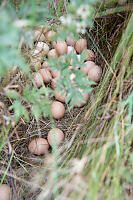
problem that the birds stay outside and lay. We found a spot
where a bird (or a few birds) had been using for at least a few
weeks. The eggs would be really suspect so it's important to
change the birds behavior so they sleep in the safety of the
chicken coop.
Bird Watching in the Salish Sea
I'm a big fan of the Rocky Point Bird Observatory (last year we
went to Nocturnal Owl
Program for Northern Saw Whet Owls) so I was browsing their
calendar for events and found that this year they are running a
number of bird watching trips partnering with Eagle Wing Tours
which I have also traveled with in the past July
2016,April of 2019 and August 2022. In
the fall they were doing trips to see Puffins, the trips were $250
and they only had one seat available. I booked the
trip. I checked in from time to time and eventually found a
second seat so Nara could join me. (Claira wanted to stay
with Grandma and bake cookies).
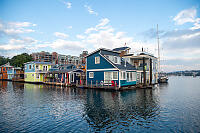
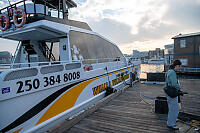
The trip left from Fishermans Wharf in Downtown Victoria at 8am
and asked you be there at 7:30 to get everything organized.
This trip is on their largest boat and it was sold out - easily 40
people were there. Nara noted these were my people just
based on the camera hardware that was there. I brought a
monopod and my 400mm lens with a 2x teleconverter because boats
can't get that close to small birds.
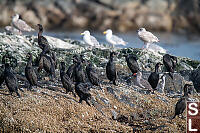
We left crispy at 8am and turned right to the Trial Islands.
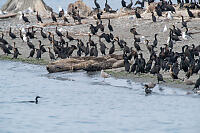
The Trial Islands have a light house, 4 large radio antenna and a
huge number of shore birds at the tide line.
These trips only work because there is food for birds that they
can get to. This area of the Salish sea isn't that deep -
maybe 400 feet and many areas are shallower. There are many
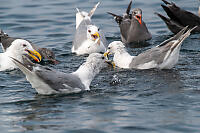
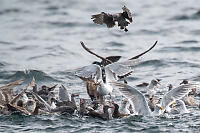
small fish here and the birds work together to form "bait balls" -
fish schooled together to make picking them off easier. Deep
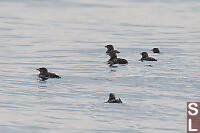
diving birds like cormorants and Common Murres can swim down to
200 feet and push the fish to the surface and sea gulls push the
fish down. The surface of the ocean can turn into boiling
pool of flashing fish as the ball hits the surface.
There are more ways to make a living here than bait balls.
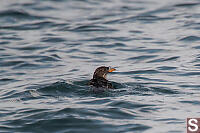
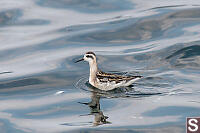
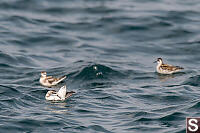
The Red-necked Phalarope are small delicate birds that didn't
appear to dive at all. The eat single krill at the surface
and we often spotted them where there was kelp floating at the
surface. It's amazing that these tiny birds can exist in
such a harsh environment, but they seam to do well.
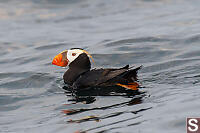
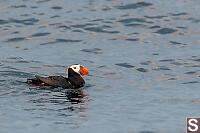
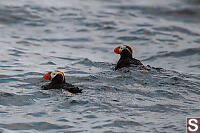
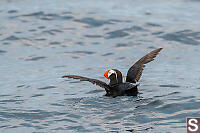
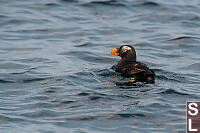
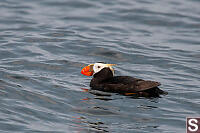
The star of the show is the Tufted Puffins. There aren't a
lot out here (we saw maybe a dozen individuals) but everyone got
really excited when they came close.
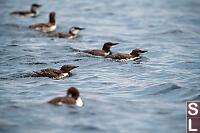
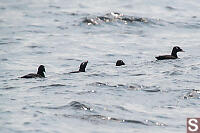
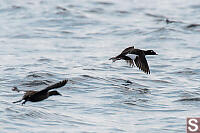
The Common Mures dominate the bird count here, followed by the
gulls. Beyond the Puffins, there are are a variety of birds
we saw once and then not again. A new species for me is the
White-winged Scoter. I have seen Surf Scoters before (they
have quite a unique head and bill shape), but this is my first
time seeing White Winged Scoters.
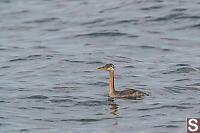
Nara described the Red Necked Grebe as a "self naming" bird.
It was clearly a Grebe and the Red Neck is clearly it's most
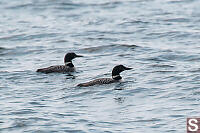
defining feature. We also spotted two Common loons.
After being in the open ocean, we headed more to the mainland to
see some different habitats. We drove further south to
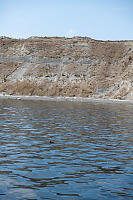
Protection Island. Protection island is a large sand bank
sticking out of the ocean which hosts thousands of ground
burrowing birds (think Rhinoceros Auklets) spread over the
cliffs.
There is actually at least family living on the island but it's a
pretty hash place without very little fresh water or trees.
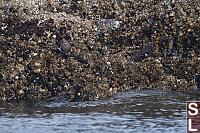
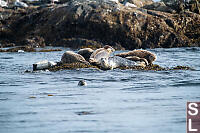
The beaches were covered cormorants and seals which tells me the
wildlife trusts the place.
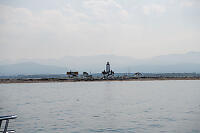
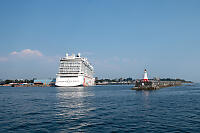
After protection Island, we traveled West to the New Dungeness
Lighthouse in the small town of Dungeness Washington. From
there, we were done and headed back for Canada. Being a
whale watching boat, we can go fast so we crossed the straight
with a strong wind in our faces.
I didn't realize there were at best a few dozen breeding pairs in
this part of the world. I'm so used to seeing thousands of
birds in communities, it was surprising that a bird could be
pretty rare, but not gone. I would certainly go again.
Saanich Fair
This is our third year going to the Saanich
fair. We have been more times (as a family) than we have
been to the PNE in Vancouver. We are starting to focus our
"Fair game".
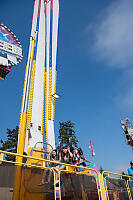
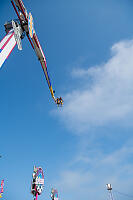
We try to arrive closer to opening time (no point walking a few km
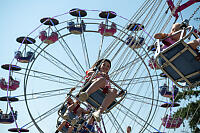
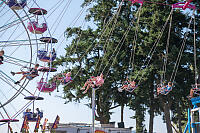
from the car) and the kids make a bee line to "speed" as it was
their favorite ride. The rides are less busy in the morning
so they try to get their rides in.
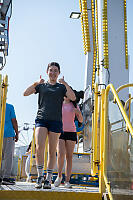
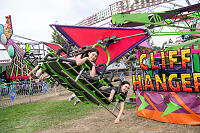
This year we had some challenges - by the second ride, Nara was
pretty sick. Claira tooks some trips on Abduction by herself
and then Yoyo by herself. By the time Nara recovered she
wanted to see the animals.
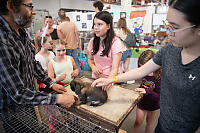
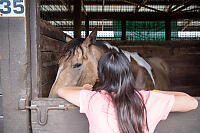
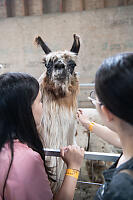
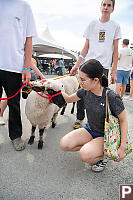
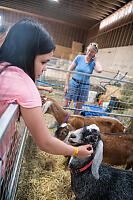
There is a small animal barn for rabbits and birds, a large animal
barn for lamas and goals and then horse barns where the horses
stay when they aren't competing. We visit them all.
The kids love the touching opportunities.
There are lots of other things to
see. We have never watched the dancing demonstrations (or
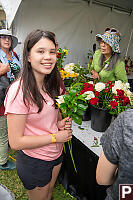
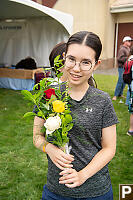
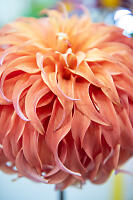
the horse riding for that matter) but we did find Victoria Floral
Artists Guild had a tent and a mountain of flowers for people to
build take home bouquets. They were very patient.
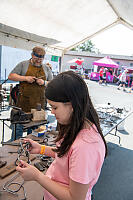
Claira also spent a lot of time at the
blacksmith tent playing with their puzzles. They had lots of
hands on puzzles (think take the ring off this) that Claira really
enjoyed playing with.
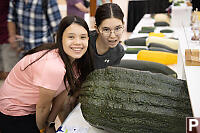
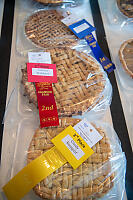
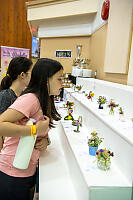
Last but not least is the exhibition
areas. There are fruits, flowers and vegetables, baking and
sewing to review. Claira found the miniature bouquets and
now has a favorite category.
Claira found one last booth - a place selling crepes.
Claira was of course happy.


 One of the
most active months of the year.
One of the
most active months of the year.