Aristazabal Island - Day 5, 6

Loredo Channel
Day 5 - Fifer Cove, Princess Royal
Island
Pretty much giving up on trying to find a bear, we drove down Laredo
Inlet and headed north up
Laredo Sound - the channel separating Aristazabal Island from Princess
Royal Island. By lunch we were next to Aristazabal Island and
went onshore to see what the island was like.
The
first
150 meters from shore was just like any
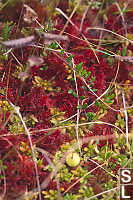
other part of rainforest we explored, but very quickly the
environment changed . The trees got smaller, the cedars
disappeared, and we were left with little scrubby shore pines.
The green moss was replaced by red and green sphagnum. We were in
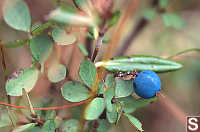
a bog. We found two useful fruits - Bog cranberry (a tiny plant),
and bog blueberry - again small. Comerical species are much
larger and prolific than these humble plants, but at one point they
were an important food source.
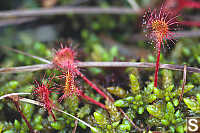
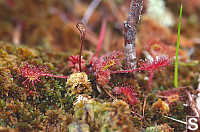
My favorite find has to be the Sun-dews. These tiny plants - only
a few centimeters tall, were common in any piece of clear moss.
Bosses happen when nitrogen poor soil is present and the sundews have
adopted by taking nitrogen from insects they kill. They are
beautiful to see.
But
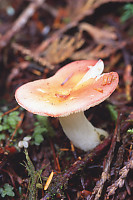
sundews were the only surprise.
Mushrooms weren't in the bog, but they grew where ever there was a good
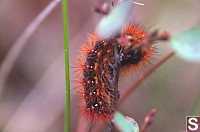
dry spot. We found a caterpillar living on blueberry, and an
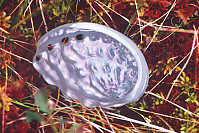
Abalone shell in nearly perfect condition.
All too soon it was time to get back to the boat. In the minuets
waiting on shore for the zodiac, I went back into the forest to look
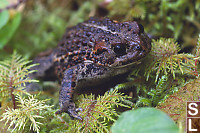
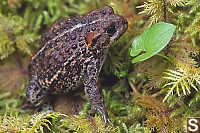
for things (mushrooms) to shoot. Much to my surprise, I found a
frog. How a frog gets onto an island the size or Aristazabal (the
next closest island is at least a km of ocean away), and then finds
another frog to mate with is beyond me.
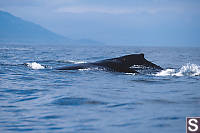
Traveling North, we crossed Caamaño Sound and got our first
major whale sighting of the trip - a mother and calf humpback
whale. We didn't get close enough for good pictures, but we knew
the whales were out here.
Day 5 - Eclipse Cove, Campania Island
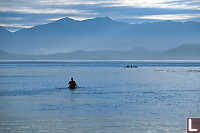
We
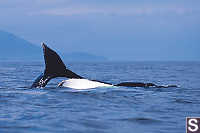
were woken when Jan saw a humpback pass
by the mouth of the
cove. Into the Kayaks for most people, but Pam and I (slow to get
read - I had just woken up) went with
Jan on the Zodiak. The whale proved too fast for the kayaks,
but the Zodiac caught up with it. The whales were feeding and
followed a pretty regular cycle. When the surfaced, they would
breath and then dive for 20 second or so, then take another
breath. After about 6 to 8 breaths, they would dive deep (showing
there tail) and disappear under the water for about 5 to 8
minuets. They didn't necessarily come up in the direction they we
dove, but generally you could count on them to follow a direction.
As the afternoon wore one, we started to see different surface
behaviour. Not all dives were so precise and sometimes full sized
whales would come up in very close proximity - perhaps close enough to
be touching.
Tags: marine mammal(5), whale(5), BC fauna(4), multiple frame image(3), plant(3), amphibian(1)
From: John Harvey Photo > Aristazabal Island > Aristazabal Island - Day 5, 6
From: John Harvey Photo > John's Overnight Page > Aristazabal Island > Aristazabal Island - Day 5, 6
Hi
Wow --- awesome photos.
I'm planning a kayak trip to this area next year --- your photos make me all the more excited about it.
Regards,
Tom
Tom
Thursday, May 22nd, 2008 at 06:56:19
I enjoyed reviewing your photos of Aristazabal Island; I spend many days each year in this beautiful area. I take it that you did not find a Spirit Bear on Princess Royal Island. I see them every year and have taken many spectacular photos of these beautiful elusive creatures. I will be back on Ariatazabal Island and Caamano Sound this spring in June of 2009 for at least two weeks. Look for my article,Fishing in The Land of The Spirit Bear, to br published In: Salmon Trout and Steelheader Magazine.
Thank you for sharing your wonderful trip. Could the amphibian you photographed be a toad instead of a frog ?? Looks like a toad to me..
Thomas
Friday, July 6th, 2012 at 09:56:42
Last Modified Tuesday, June 9th, 2009 at 00:52:09 Edit
Copyright and Contact Information.